Thursday, July 5, 2012

The Bicentennial Woods, Allen County

      After hiking the last two nature preserves with my adoring husband, Sherman, and his faithful companion, Cell Phone, I decided to once again hike alone.  
http://www.acreslandtrust.org/templates/System/details.asp?id=44551&PID=630179
      This solo venture brings me to The Bicentennial Woods, a hilly 80 acre preserve in northern Allen county. The property was acquired to honor Fort Wayne's Bicentennial in 1994. 
Willow Creek, a tributary of Cedar Creek
      As Fort Wayne approached its 200th anniversary, ACRES began looking for an appropriate property to commemorate the historic event.  
A small stream leading to Willow Creek
      The Bicentennial Woods location was selected because the gigantic trees growing here are representative of what much of the area looked like before it was settled.  
One of several scenic bridges within The Bicentennial Woods preserve
      Only a few trees have ever been removed from this property, which is believed to the last stand of virgin timber in Allen County. Stately oak trees, some with trunks nearing four feet in diameter, and huge sycamores dominate this hilly, heavily wooded preserve.

I'm sure this knobby tree formation is here for some interesting scientific reason.
However, my brain can only see one thing...
ShadeMaster from Genuine Tree Peeple
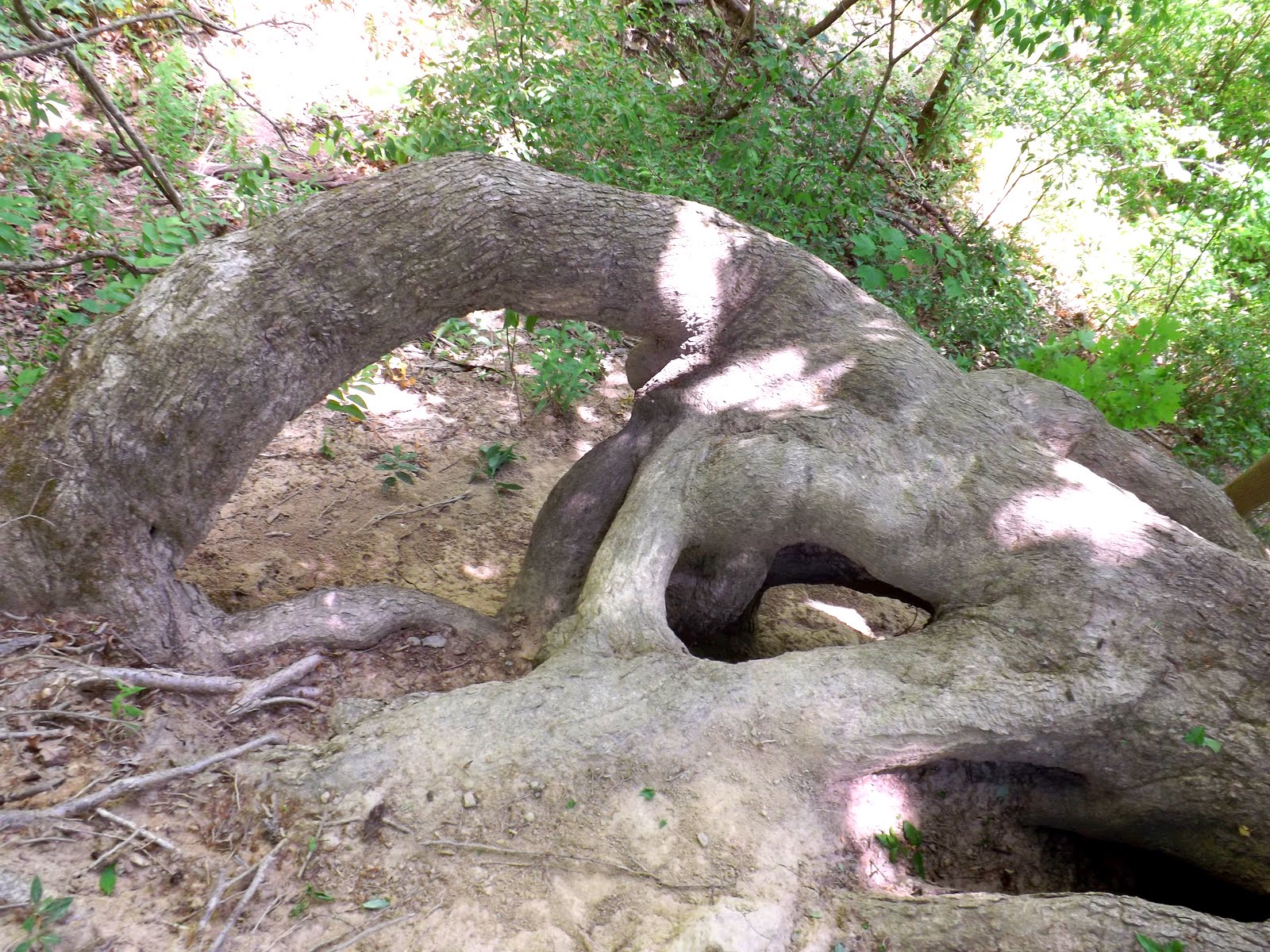
An amazingly textural, twisted tree
      Besides the towering oaks, hickories, sycamores, and dogwoods that surrounded me, I also took in these interesting sights...
Even the bracket fungi look like they need some rain.
Dryad's Saddle, polypore bracket fungus
The name "Dryad's Saddle" refers to tree nymphs of Greek mythology called dryads.  According to legends, dryads are small, shy wood spirits who look after the forest and keep an eye on the health of the trees.  This mushroom's shape and size make it a suitable, and probably rather comfortable, seat for a dryad. 

The Wood Nymph, 1898
by Charles Marion Russell
Chickweed
In folklore, a sprig of chickweed carried in your pocket was said to draw the attention of a
 loved one or ensure the fidelity of your mate.

A crazy, wild stand of creeping, crawling, hanging vines.

"The vine embraces the elm, and other plants cling to the vine.
So that things which have no powers of sense to perceive anything else,
 seem strongly to feel the advantages of union."
~Desiderius Erasmus, 1521


      I would enjoy a return trip to Bicentennial woods. Perhaps the fall, when the leaves are turning, would be a good time to share this little part of Indiana's natural splendor with my kids.  And who knows...maybe Sherman and Cell Phone will join us, too!

Tom and Jane Dustin Nature Preserve, Allen County

      The husband/wife nature hike continues as my special hiking companion, hubby Sherman,  accompanies me to the Tom and Jane Dustin Nature Preserve in Allen County.
http://www.acreslandtrust.org/templates/System/details.asp?id=44551&PID=697595
      If you visited my last post, you know my husband, Sherman, is my hiking companion today, and we started our hike at the Robert C. and Rosella C. Johnson preserve which is immediately adjacent to the Dustin preserve.  


A peek at Cedar Creek
      By now, we know we've crossed over into the Dustin preserve because we have reached Cedar Creek. Cedar Creek forms the southern boundry of this preserve, and is a State Scenic and Recreational River.  There are only 3 rivers in Indiana with this designation. (The others are Wildcat Creek in Tippecanoe and Carroll counties and the Blue River in Harrison, Crawford, and Washington counties.)
A perfectly sunny day.  I love how the reflections of the trees in the water
look almost as lifelike as the real things.
      As the roadside sign says, the Dustin preserve is also the home of the Acres Land Trust office. Much of this preserve, including the house which is now Acres' administrative office, was originally owned by Tom and Jane Dustin.  The Dustins were eminent conservationists who helped pass many of Indiana's most significant pieces of conservation statutes, including the Nature Preserves Act and the Natural and Scenic Rivers Act.
Ready for duty.
Visitors to many Acres Land Trust preserves will see birdhouses like this  placed in strategic locations, providing bird habitats for nesting and raising birdie families.  I found these lined up on a shelf outside the Acres Land Trust office
This little guy was the only one working today at the Acres Land Trust offices.  
      Growing outside the office building we found several species of beautiful summer flowers.  I snapped away with my camera while Sherman sat on a bench and, well, texted.

Tiger lily.  We all drive by scads of tiger lilies growing along our roadsides all summer long.
But did you know... 
Native Americans used this flower for food, and tiger lilies are still dried, boiled, baked, or roasted and added to soups and stir-fry dishes in some regions of the world.  The Chinese have used tiger lilies medicinally for over 2000 years. The roots of the lily contain antibacterial, anti-parasitical, anti-inflammatory, and diuretic properties.  In herbal medicine, a tincture made from fresh tiger lily can be used in the treatment of uterine-neuralgia, congestion, and nausea.  Other uses include treatment for heart problems, eye problems, and for symptoms of menopause.
No longer will I take this common orange ditch flower for granted!

Crown Vetch
This invasive summertime wildflower is actually an herb in the legume family.
 That means it is a relative with peas and beans.  These flowers are very attractive to
 bees and butterflies, and as it turns out, poisonous for horses. 
 
Chameleon plant, or fishwort.
 This plant is native to Japan, Korea, southern China and southeast Asia.  One of the traditional asian terms for this plant is yúxīng cǎo which literally translates to "fishy-smell herb."
I guess we now know why it is also called "fishwort."

      After threatening to steal Sherman's cell phone away and toss it into the nearby Cedar Creek, he finally agreed to put it away for a while.  Long enough to hike back to the car, anyway. And it's a good thing, for if he hadn't stowed it away how could he have found these enormous, century-old trees? Trees that were no doubt here during the occupation of his own Native American ancestors.  Read more about tree growth, age, and how they've joined together here.


It's official!  Sherman is a tree-hugger!
      And how could we have witnessed this quintessential summertime vista together?  Dancing leaves silhouetted against an azure blue sky as perfectly white puffy clouds float by. I prefer this view over a text message any day!


"That beautiful season the Summer!
Filled was the air with a dreamy and magical light;
And the landscape lay as if new created
in all the freshness of childhood."
-  Henry Wadsworth Longfellow


      We should all lay down our cell phones once in a while, and enjoy the natural splendor that surrounds us, wherever we are!  See you next time!


Wednesday, July 4, 2012

Robert C. and Rosella C. Johnson Nature Preserve, Allen County

      I had the pleasure of visiting the Johnson Nature Preserve together with my husband, Sherman.  It is rare that he and I get to venture out into nature without our kiddos!
http://www.acreslandtrust.org/templates/System/details.asp?id=44551&PID=697595
      The Johnson preserve actually shares space within an 88 acre area with two other nature preserves, the Tom and Jane Dustin preserve and the Whitehurst preserve.  Since it's nearly impossible for the average hiker to know where one preserve ends and another begins, I'll do my best to share photos that I'm pretty sure came just from the Johnson preserve.
How nice..."his & hers" trails.
      I should have known when Sherman offered to accompany me on this day's hikes, that it wouldn't take long for him to loose interest.  
Some of the preserves I've hiked have been so secluded as to have no cell service.
Lucky for Sherman, this location is fully connected. 
      While Sherman was busily texting away, I was snapping pics of anything and everything.  Here are a few interesting things I saw...
Aren't these tiny mushrooms adorable?!
These are young polypore fungi.  Polypores are one of the most common and widespread types of wild mushrooms.  Many are edible, and none are poisonous.  There are 3 characteristics that polypore mushrooms share: 1) Nearly all polypores grown on wood, such as trees, logs, or stumps.  These mushrooms are either decomposers or parasites and wood is their food. 2) Polypores are shaped more like a shelf than an umbrella. For this reason they are sometimes called "bracket" or "shelf" fungi. If they have a stem it will be very short and off-center.  3) All polypores have many tiny holes, or pores, on the underside of their caps.  Hence the name polypore, which means "many pores." Microscopic spores emerge from these pores as part of the fungal reproductive cycle. 

**Please note: not all shelf-shaped mushrooms, mushrooms growing on wood, or mushrooms with pores on the underside are non-poisonous! To be a polypore the fungus must exhibit all three of these characteristics together. 
The skeleton of a former pine tree.  
Juniper berries.
These aren't really berries.  A juniper berry is actually the cone of the juniper tree or bush.  The scales of the cone are unusually fleshy and merged together which give it it's berry-like appearance.  Did you know...the alcoholic spirit gin gets its flavor from juniper berries?  

     As I turned to show Sherman the juniper berries I had found, and tell him he should make his own gin if he could find a recipe, this is what I saw...
I'm sure he wasn't Googling gin recipes.
      In between texts I managed to get him to hike with me down a steep bluff to the edge of Cedar Creek, and into the next preserve.  But halfway down, we discovered this amazing tangle of exposed tree roots...


These very old trees have experienced lots of years of topsoil erosion, leaving empty spaces
 underneath and in between their root systems.  If Hank were with us, I'm sure he
would attempt to investigate these mysterious alcoves.

      I'm pretty sure we've crossed over into the neighboring nature preserve by now, the Tom and Jane Dustin preserve.  Stay tuned as our husband/wife hiking adventure continues!

Monday, July 2, 2012

Anna Brand Hammer Nature Preserve, Wells County

http://www.acreslandtrust.org/templates/System/details.asp?id=44551&PID=635745
      Just a few miles away from our last stop, Acres Along the Wabash, is the Anna Brand Hammer Nature Preserve.  It is a small preserve, a forest oasis surrounded by agricultural fields, with just 1/2 mile of trails.  Perfect for a quick respite with nature! 
There are many types of trees growing here, including red and white oaks,
 hickory, cherry, beech and maple trees.  
A small stream, currently dried up due to Indiana's drought conditions, would normally
wind through the forest, providing amusement for the several species of salamanders
that live in this preserve.
      Besides the trees and salamanders, the kids and I saw evidence of several other living creatures on our hike...
These impressive tunnels have been chewed into rotten wood, probably by some
type of beetle larvae. It makes a very interesting texture, don't you agree?
Shelf fungi like these generally attach to and feed on decaying wood. I think it's 
fascinating thatthese are covered with a thin layer of moss.  Moss can grow anywhere!   
The web of a funnel weaver spider.  
We found this one, then upon further investigation realized
we were surrounded by literally dozens of webs like these.
 
Funnel weaver spiders are very common in the midwest.  They build sturdy, horizontal webs
with an open-ended funnel at one end.  The spiders sit in the funnel and wait for an insect
to become entangled. They then rush out of their funnel, subdue their lunch, and retreat back
 into the funnel to enjoy their meal.  

      And of course, we saw several other interesting sights as well...


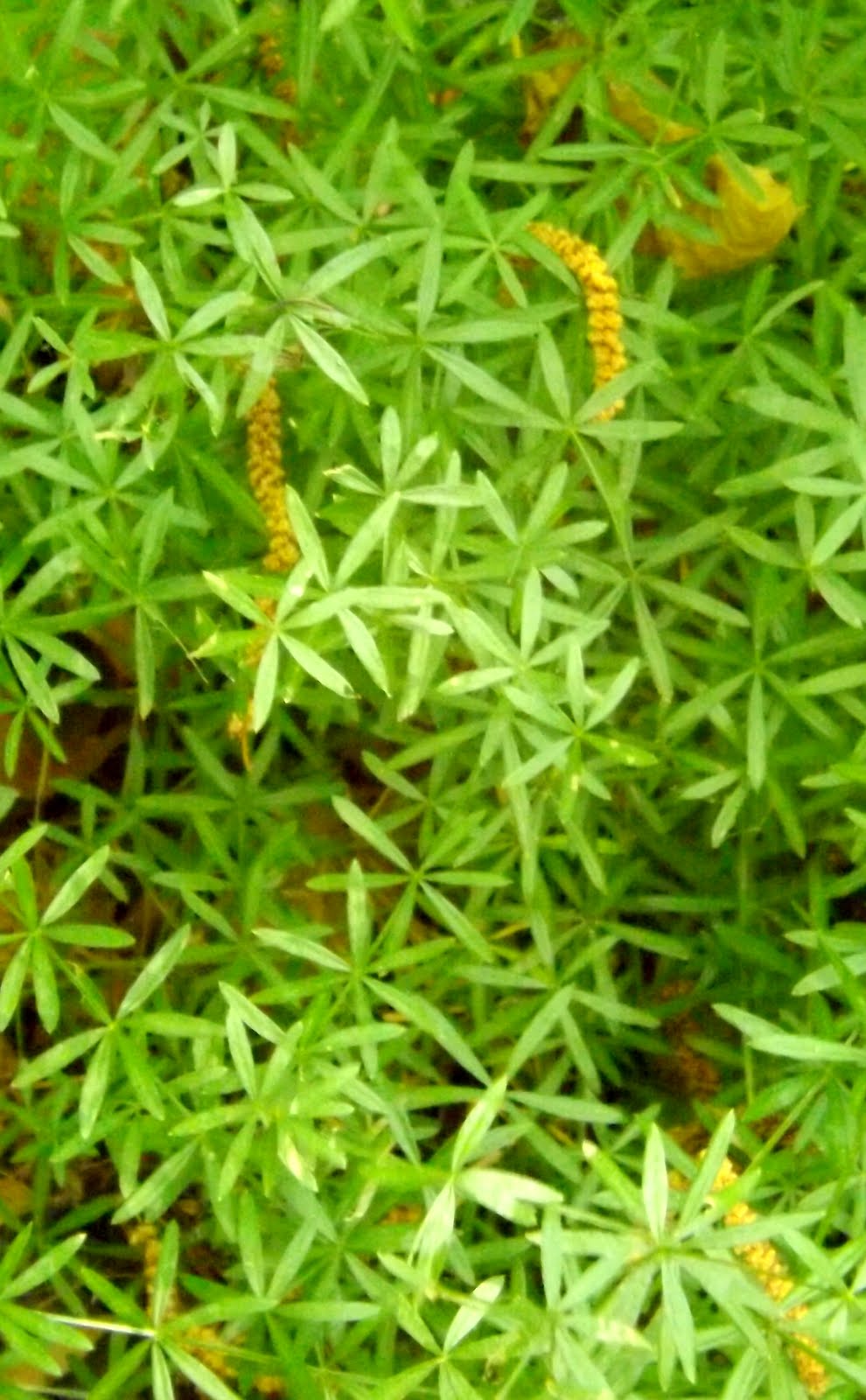
This patch of cleavers creates a pretty visual texture and pattern with it's star-shaped leaves.
"Cleavers" is a general name for climbing or sprawling plants that are sticky.  Their leaves and stems have fine hairs tipped with tiny hooks, making them cling to clothes and fur much like velcro.

Hank calls this a "potato chip tree."
 He says the bark reminds him of many, many crispy potato chips.
 However, he refused my offer of a taste test.
I was struck by the many different shades of green found in this
photograph.  I count at least five...you?
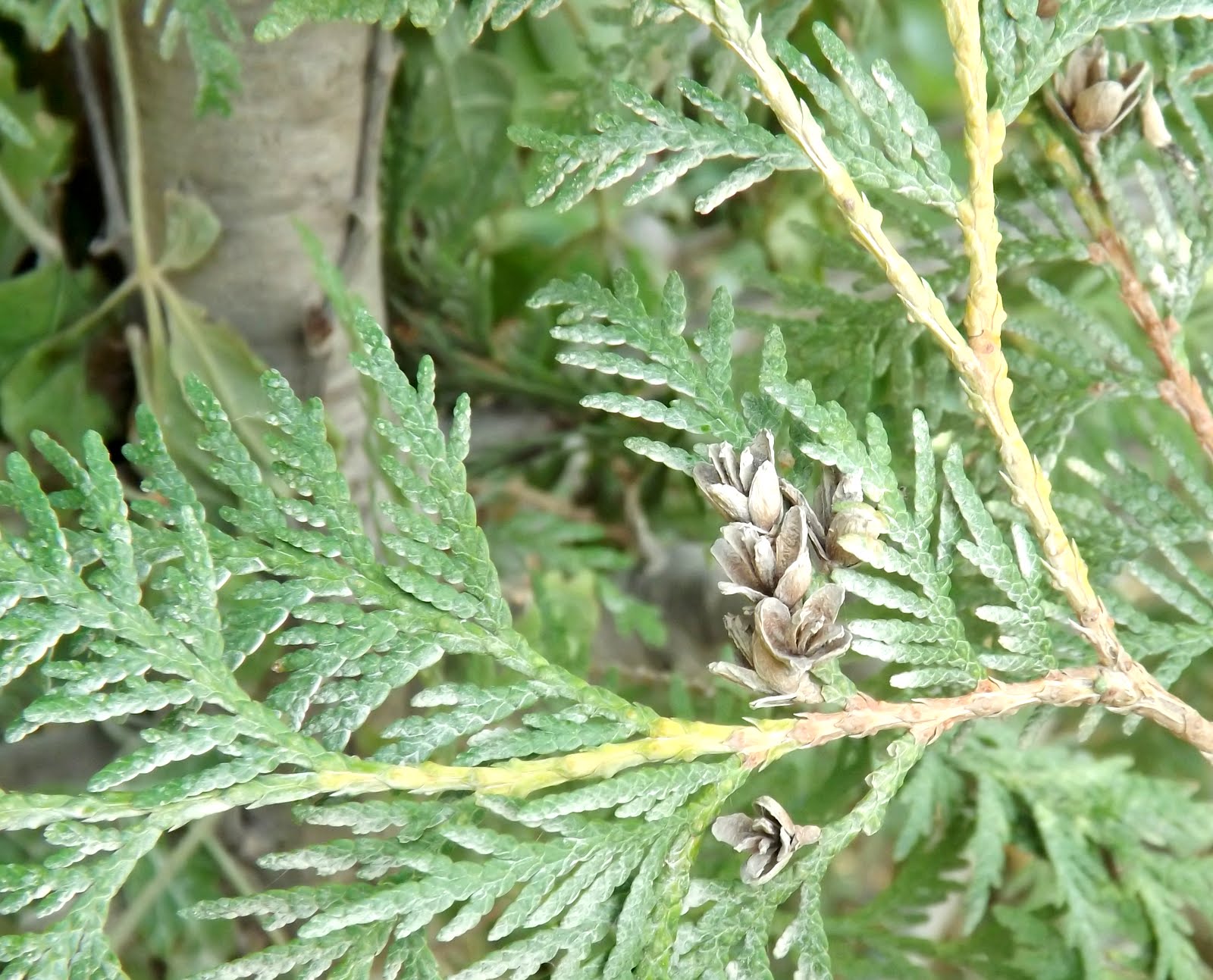
Juniper cones, like tiny wooden flowers.
      When we reached the end of our 1/2 mile hike through the Anna Brand Hammer preserve, my kids had only one request..."to the nearest gas station, Mom!  We're hungry for some potato chips!"  

Acres Along the Wabash, Wells County

http://www.acreslandtrust.org/templates/System/details.asp?id=44551&PID=635743
      A week or so ago, the kids and I ventured over to Wells county to visit Acres Along the Wabash nature preserve.  As the name implies, the entire southern edge of this preserve borders the Wabash River.  It makes for some very scenic hiking!  
A view of the Wabash River from atop a tree-lined bluff.
Overlooking the river, it's easy to imagine a time when Native Americans roamed this land, and white explorers paddled down this river. 
We weren't the only ones visiting the river today!  
Calm waters today.
The lack of rain lately made it possible for us to venture out to the
middle of the river and rest on a stoney "island." 
      Although it's hard to imagine any explorers paddling down the river today (they'd have to carry their canoe most of the time), we did find some enormous trees that we decided are probably old enough to have been growing here when Native Americans called this area home.
Old trees have a way of making us feel small!
Tree trunks grow thicker every year by adding a new ring of growth.  New growth takes
 place in the cambium, the soft layer of tissue between the wood and bark of trees.
This tree has many, many growth rings, I am sure!
      Many of Indiana's forest tree species, like oaks, sycamores, maples, and elms, have lifespans of an average of 200 years.  And since the Native Americans occupied this area until 1846 (166 years ago), it is very conceivable that these trees shared this land with the Miami tribes who lived along the Wabash River. 

Hank found 3 trees in one!
Actually, there's a name for this!  When trees become conjoined during growth, it's called inosculation.  The trees first grow separately, but very close to each other. As they add growth
rings and become wider, the trees eventually touch. At this point, the bark on the touching surfaces is gradually abraded away as the trees move in the wind and rub against each other.  Once the cambium of the trees touch, they self-graft and grow together.  


    While playing down at the river, Hank found the shell of a river mussel. It is not uncommon to find dozens of these freshwater shells littering the banks of the Wabash. 
Mussels are simple creatures kept safe by two oblong shells connected by a hinge.  
There are 47 different freshwater mussel species found in Indiana, of which 24 are
 considered federally or locally endangered.  
      I love it when I find similarities in unrelated things, especially naturally occurring things.  It's God's little treat for me.  I love how these fungi and flowers resemble the shape of the mussel shell...
Turkey Tail fungi is a type of decay fungus,  feeding on rotten wood.  
These dry flower husks also resemble the mussel shell shape.
As usual, down every path we found many interesting shape patterns and textures in the foliage:
I love how these leaves appear to be lined up, one in front of the other.
We were thankful for a cooling breeze on this hot day.
 You can see evidence of the breeze in these blowing leaves.
Compound leaves, small and brilliant green
Patterns even appear in the shadows!

      We enjoyed our time at Acres Along the Wabash.  If you ever find yourself in Wells county, you should stop by for a stroll through Indiana's natural splendor!  By the way, just a few roads over is another Acres preserve, Anna Brand Hammer.  Guess where we're heading next?   See you there!